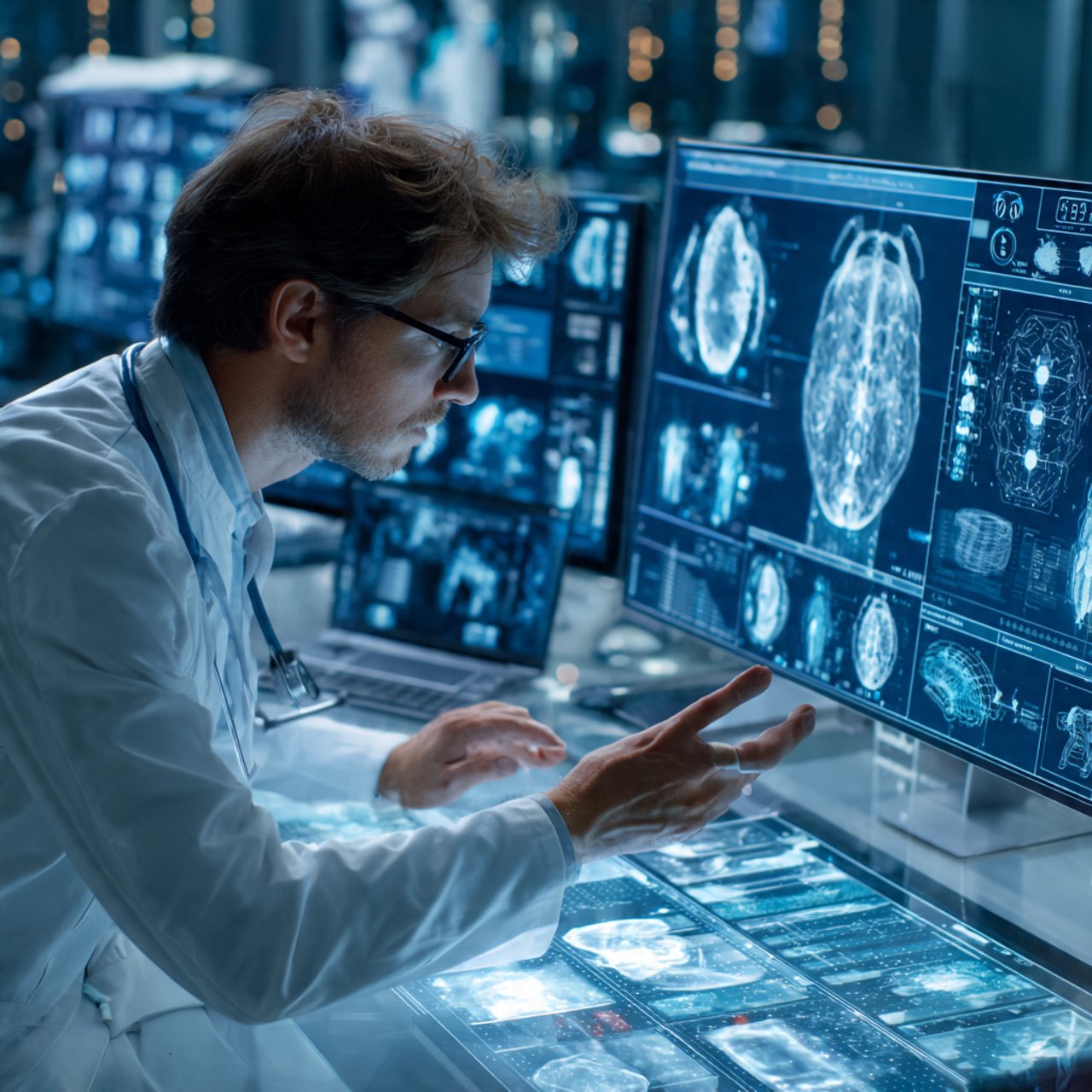
Technology has really changed the way we do healthcare. It is now easier for people to get the care they need. We have things like tools to help figure out what is wrong with us and telemedicine which is like a video call with a doctor. We also have health records, which are like digital files that keep track of our medical history and wearable devices like fitness trackers that help us stay healthy. Technology is a part of healthcare now. It has helped people get faster made things easier, for doctors and patients and allowed them to talk to each other in new ways. Technology and healthcare are very connected now. Technology has made healthcare better.
The use of technology in healthcare is a deal. It has a lot of things about it but it also has some problems. Technology in healthcare can be tricky because we have to think about peoples information it can be expensive and we need people who know what they are doing to make it work. In this article we are going to talk about the bad things about technology in healthcare. We will look at how technology, in healthcare affects patients and medical professionals and what we might see in the future with technology in healthcare.
What Is Healthcare Technology?
Healthcare technology, which people also call health tech or medical technology is when we use computers and other digital things to help people who’re sick. We use these tools and devices to figure out what is wrong with someone to make them feel better to keep an eye on them and to take care of them. Healthcare technology has lots of parts, like machines, computer programs and digital systems that make it easier for doctors and nurses to do their jobs and help patients.
Here are some examples:
Telemedicine and virtual consultations
Electronic health records (EHR)
Wearable devices for health monitoring
Artificial intelligence in diagnostics
Robotic surgery and automated equipment
Healthcare technology is really good at making things more accurate. It helps doctors and nurses do their jobs better and faster. This technology also makes sure that patients are more involved in their care. Healthcare technology does a lot of things for patients and for the people who take care of them. It makes healthcare better overall. Healthcare technology is very important, for making sure patients get the care possible.
Benefits of Technology in Healthcare
Today healthcare technology is really helping people who’re sick the doctors who take care of them and the hospitals where they get treated. This technology is doing a lot of things for patients, doctors and medical institutions. Healthcare technology is making things better, for everyone involved. It is helping patients, doctors and medical institutions in ways.
- Improved Patient Care
Technology really helps doctors make an accurate diagnosis. This means they can give people the treatment. Technology is very useful for making people feel better. It helps doctors understand what is wrong with the patient. Then they can give the best treatment, for that problem. Technology makes diagnosis and treatment more effective.
Digital imaging and advanced diagnostic tools
AI-assisted disease detection
Remote patient monitoring
This means that patients get the care they need on time and it is correct which helps to lower the risk of problems, with the care that the patients receive from the doctors and nurses who are taking care of the patients.
- Telemedicine and Remote Healthcare
Telemedicine is a way for patients to talk to doctors without having to go to a clinic or hospital. This means patients can see doctors, from their homes. Telemedicine makes it easy for patients to get the help they need from doctors. Patients can use telemedicine to talk to doctors about their health problems.
The benefits of this include:
Access to healthcare from anywhere
Reduced travel and waiting times
Continuity of care for chronic conditions
Telemedicine is really helpful in places that’re far away from cities and during big problems that affect the whole world. Telemedicine is very useful in these situations because it lets people get help from home. People, in areas and people who are stuck at home during global crises can use telemedicine to talk to doctors and get the help they need. Telemedicine is a way to get medical care when you cannot leave your house or when you live in a rural area.
- Electronic Health Records (EHR)
Electronic health records put all of a patients information in one place on a computer. This way doctors and nurses can easily look at the patients health records and see what is going on with the patients health. The electronic health records have all the information about the patient so it is easy to find what you need. The electronic health records are a help to doctors and nurses because they can look at the electronic health records and make good decisions, about the patients care.
Advantages of EHR:
Easy access to patient history
Improved coordination between doctors and specialists
Reduced paperwork and administrative errors
Electronic Health Record systems make medical work easier and safer for patients. They help doctors and nurses do their jobs better. Electronic Health Record systems are very important, for safety.
- Wearable Health Devices
Wearable devices can tell us what is going on with our body. They track things like our heart rate. How much we move around. Wearable devices do this all the time so we can see what is happening now. This means we can get information about our signs and physical activity in real-time, from these wearable devices.
We have things like:
Smartwatches with heart rate monitors
Fitness trackers measuring steps, calories, and sleep
Medical-grade wearables for chronic disease monitoring
People can use wearables to take care of their health. Wearables give patients the power to do things that help them stay healthy. Patients can use wearables to keep an eye on their health and make choices. Wearables are really helpful for patients who want to be, in charge of their health.
- Enhanced Medical Research
Technology really helps to speed up research and development in the healthcare field. This means that new healthcare things can be found and made faster with technology. The healthcare field is very important. Technology is a big part of it. Technology helps healthcare to get better and better.
Big data analytics is really good at finding patterns in data. It looks at the information from patients. Finds things that are similar. Big data analytics does this to help doctors understand data better. Big data analytics is very useful, for looking at data and finding patterns that can help people get better.
The artificial intelligence is really good at figuring out what diseases are going to be a problem and how well the treatments for those diseases will work. This means the artificial intelligence can look at the disease trends and see what is happening with the treatment effectiveness of the diseases. The artificial intelligence is very useful, for predicting disease trends and treatment effectiveness of the diseases.
Virtual simulations really help to cut down on trial and error when it comes to creating drugs. This is a deal because virtual simulations can do things that real life experiments cannot. Virtual simulations can test things at the same time. This means that the people who make drugs can find out what works and what does not work quickly. Virtual simulations are very good, at reducing the time it takes to develop drugs. Virtual simulations are a part of drug development.
Digital research tools help us come up with ideas really fast and make healthcare solutions better. We use research tools to find new ways to make people healthier. Digital research tools are very important, for making healthcare solutions.
- Automation and Robotics in Surgery
Robotic assisted surgery and automated systems make things more precise and safer. They help doctors do a job and reduce the chances of something going wrong during surgery. Robotic assisted surgery is really good, at helping doctors be more precise. Automated systems also help reduce risks.
The good things, about this are:
Minimally invasive procedures
Shorter recovery times
Reduced human error
Better outcomes in complex surgeries
Automation is really helpful, to surgeons when they are doing delicate operations and it helps them do it safely. The surgeons can do their job with the help of automation. This makes sure they are safe while performing these delicate operations. Automation supports the surgeons.
- Cost Efficiency and Resource Management
Technology is really useful, for healthcare institutions. It helps them manage their resources in a way. This means healthcare institutions can use technology to make sure they are using their resources efficiently. Technology makes it easier for healthcare institutions to do their job.
Cloud-based management systems really help cut down on work. This means that people who use these systems have to do paperwork and other tasks that take up a lot of time. Cloud-based management systems make things easier for everyone involved. They reduce the overhead that can be such a burden. With cloud-based management systems people can focus on important things. Cloud-based management systems are very useful, for organizations.
Using computers to schedule appointments is a way to make sure staff and patients have a good time to meet. The computer helps make a schedule that works well for the staff and the patients. This way the staff and patients can have their appointments at a time that’s good for them. The computer is really good at making sure everything runs smoothly so the staff and patients can just focus on their appointments. The computer scheduling system is very helpful, for making sure staff and patient appointments go well.
Predictive analytics really helps with managing the inventory. It also makes the supply chain management better. The use of analytics in inventory and supply chain management is very useful because it helps to make sure that the right things are available at the right time. This is important for inventory and supply chain management. Predictive analytics is good, for inventory and supply chain management.
This helps to cut down on costs. It makes the company run more smoothly. The company will save money and the operational efficiency of the company will be better. This means that the company will be able to do things and with less waste, which is good, for the company. The operational efficiency of the company is very important.
Challenges of Technology in Healthcare
Technology is really great. It helps us in many ways.. It also creates some problems that we need to deal with. We have to think about these problems and find ways to solve them because technology is not perfect. It has its downsides. Technology can do a lot of things for us but we have to be careful and make sure that the problems it creates do not hurt us.
- Data Privacy and Security
Healthcare data is sensitive information. We need to make sure that this healthcare data is protected at all times because it is very important. Protecting healthcare data is a must.
The things that are hard to deal with include:
Cybersecurity threats and data breaches
Unauthorized access to patient records
Compliance with privacy laws like HIPAA
We need to make sure we have security measures in place to keep patient information safe. This means we have to use encryption to protect the information of patients. Patient information is very important. We have to do our best to keep it safe. We have to use security measures and encryption to protect information at all times.
- High Costs and Implementation Barriers
Healthcare technology that is really good can cost a lot of money to get started with. The cost of healthcare technology is something that people have to think about when they want to use it. Advanced healthcare technology is not cheap.
We have to deal with some problems. The things that are tough to deal with include:
High initial investment for equipment and software
We need to teach the staff how to use these technologies. The staff have to learn about the technologies so they can do their jobs better. Training the staff to use technologies is very important. When the staff know how to use the technologies they can work more efficiently.
The new technologies will help the staff to do things faster and better. So we have to make sure the staff get the training they need to use the technologies.
Maintenance and updates of digital systems
Small clinics and hospitals may have a time paying for these technologies. They have to spend a lot of money on these things. The cost of these technologies is a problem, for small clinics and hospitals.
- Dependence on Skilled Professionals
Healthcare technology is really advanced these days. It needs people who know what they are doing to work. This means we need trained professionals to use the healthcare technology. The healthcare technology will not work well without these trained professionals.
Challenges include:
Shortage of trained IT and healthcare personnel
Continuous learning to keep up with technological advancements
If the staff is not trained the way there is a big risk of errors. The staff needs to be trained so that they can do their jobs correctly and avoid mistakes. This is really important because errors can cause a lot of problems. There is a risk of errors if the staff does not have the training.
Healthcare institutions need to spend money on teaching their staff things and helping them get better at their jobs. This is very important, for healthcare institutions. They have to do this so that the people who work there can learn and improve their skills. Healthcare institutions should make sure they are doing this because it will help them do their jobs better.
- Ethical and Legal Concerns
The use of Artificial Intelligence, robots and computers in healthcare is something that makes us think about what’s right and wrong. We have to consider the ethics of Artificial Intelligence and tools in healthcare. This is because Artificial Intelligence and digital tools, in healthcare can affect people in ways.
I have some things that are worrying me these include:
Decision-making by AI in patient care
Patient consent and autonomy
Liability in case of technological failure
Ethical guidelines and regulations are really important. We need to have them so people can trust us. Ethical guidelines and regulations help keep everything honest.
- Technical Failures and Reliability
Technology is not perfect. Sometimes systems break down. That can hurt the care that patients get. Patient care is very important. System failures can really affect patient care.
Examples:
Software glitches in EHR or telemedicine platforms
Device malfunctions in diagnostic tools or wearables
The hospital is having some problems because the network is not working. This is affecting how the hospital runs. The network outages are causing issues, with hospital operations. Hospital operations are very important. The network outages are making it hard for the hospital to do its job. The hospital needs the network to work properly so that hospital operations can run smoothly.
Backup plans and reliable infrastructure are critical.
The Future of Technology in Healthcare
The future of healthcare technology is going to be really cool. It will bring better ways to take care of patients. Healthcare technology is something that is always changing. This means that patient care will get better and better. Healthcare technology is very important, for people who’re sick or hurt.
Things that are going to happen in the future include:
AI-driven predictive healthcare
Personalized medicine using genetic data
Advanced telehealth and remote patient monitoring
Integration of IoT in hospitals and clinics
Virtual reality for surgical training and patient rehabilitation
Technology is going to keep making healthcare better for people. It will be easier for people to get the help they need. Healthcare will also be more precise. Focused on the people who need it which means it will be more about the patients. Technology will make healthcare more accessible to people. It will be more precise and it will be more, about the patients, the people who need healthcare.
Technology in healthcare has really changed the way we get help. We get care and things like telemedicine and wearables are available. Machines also do some work for us now which makes things easier to manage.
Technology in healthcare gives us a lot of benefits like improved care and efficient management. We also have technology in healthcare like automation, which’s very useful.
Technology in healthcare also has some problems. We have to think about keeping our information safe which is a big deal with technology, in healthcare. It can also be expensive. We have to think about what is right and wrong. We need people who know what they are doing to work with technology in healthcare.
When implemented responsibly, healthcare technology improves patient outcomes, supports medical professionals, and drives innovation. By understanding both the benefits and challenges, healthcare institutions and patients can embrace technology safely and effectively in the digital age.
Leave a Reply